Understanding sleep apnea
Signs & symptoms of sleep apnea
Obstructive sleep apnea leaves clues around the clock – some while you sleep, some long after you’re awake. Here’s what to watch for at night and during the day, and which signs mean it’s time to get evaluated.
While you sleep
These are the signs a partner, roommate, or recording app usually catches first:
- Loud, chronic snoring - most nights, not just after a late evening
- Pauses in breathing, followed by gasping, snorting, or choking
- Restless, tossing-and-turning sleep
- Frequent trips to the bathroom during the night
- Night sweats or waking with a racing heart
- Insomnia-like awakenings you can't explain
After you wake
Fragmented, oxygen-starved sleep follows you into the day:
- Waking with a dry mouth, sore throat, or morning headache
- Feeling unrefreshed no matter how long you slept
- Heavy daytime sleepiness - dozing at your desk, on the couch, or worse, at the wheel
- Brain fog: trouble focusing, remembering, and making decisions
- Irritability, short temper, or low mood
- Reduced interest in intimacy
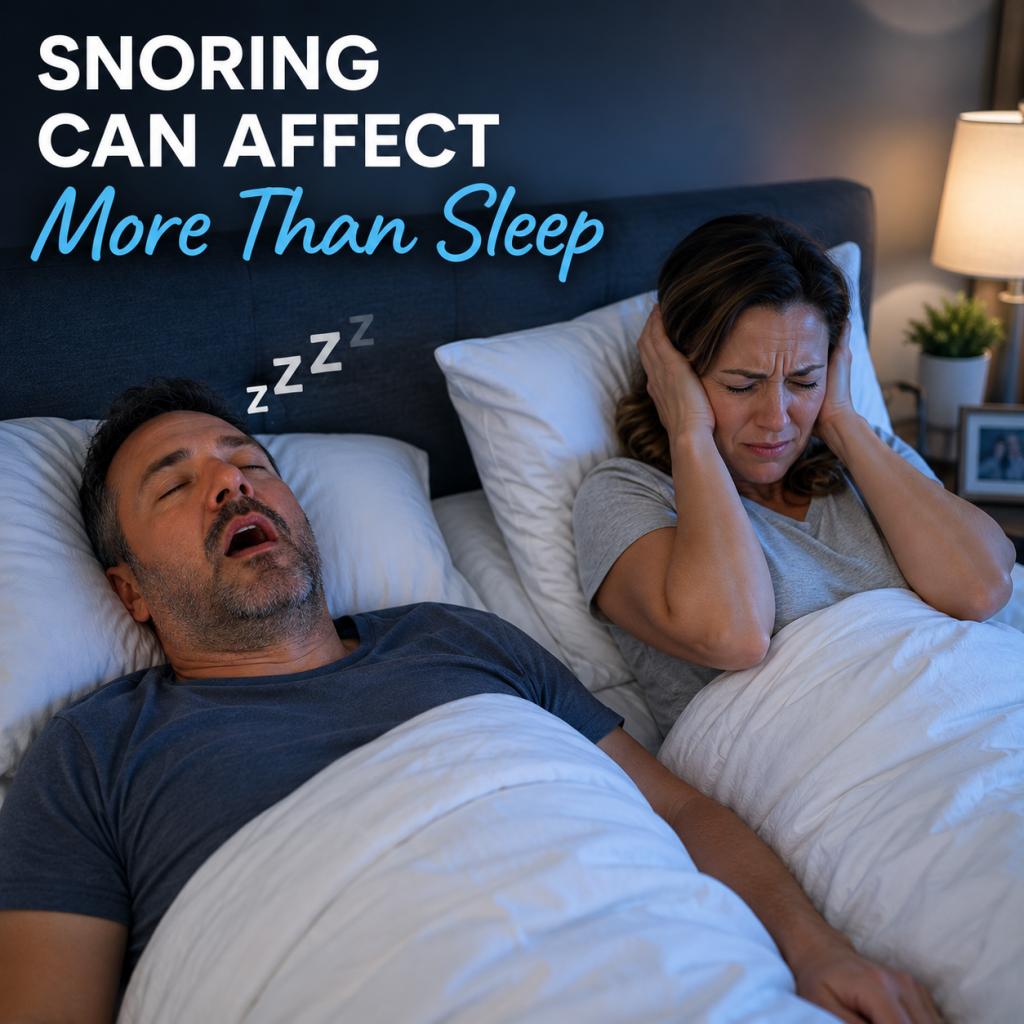
The observer effect
Sometimes your partner knows first
Because apnea events happen while you’re unconscious, the person sharing your bed is often the first – and best – witness. If your partner has ever said “you stopped breathing last night” or “you were gasping in your sleep,” take it seriously. Witnessed apneas are among the strongest indicators of obstructive sleep apnea.
No partner? A voice-activated recording app or a night of self-observation notes (how many times you woke, how you felt at 10 a.m.) can provide useful clues to bring to your consultation.
When to seek help promptly
Make an appointment – with us or your physician – if you have witnessed breathing pauses, gasping awakenings, or daytime sleepiness that interferes with driving or work. And if you have chest pain, severe shortness of breath, or another medical emergency, call 911 rather than waiting for an office visit.
Remember: symptoms respond to treatment. Most patients notice quieter nights and clearer mornings within the first weeks of consistent oral appliance use.
Checked more boxes than you'd like?
You don’t have to keep pushing through exhausted days. One appointment at our Washington, PA office starts the path to genuinely restful sleep.