Understanding sleep apnea
Snoring: harmless habit or warning sign?
Every snore is the sound of air squeezing through a narrowed airway. Sometimes that’s all it is. But when snoring is loud, nightly, and paired with pauses in breathing, it’s often the most audible symptom of obstructive sleep apnea.
Why we snore
The physics of a noisy night
During sleep, the muscles of your throat, tongue, and soft palate relax. If the airway narrows enough, air rushing through makes the soft tissue vibrate – that vibration is snoring. The narrower the airway, the harder your body works to pull air through, and the louder the snoring becomes.
Simple (primary) snoring is noise without meaningful drops in airflow or oxygen. Obstructive sleep apnea is what happens when that same airway doesn’t just narrow – it repeatedly collapses shut, cutting off breathing entirely.
You can’t reliably tell the two apart by loudness alone. What matters is what happens between the snores.
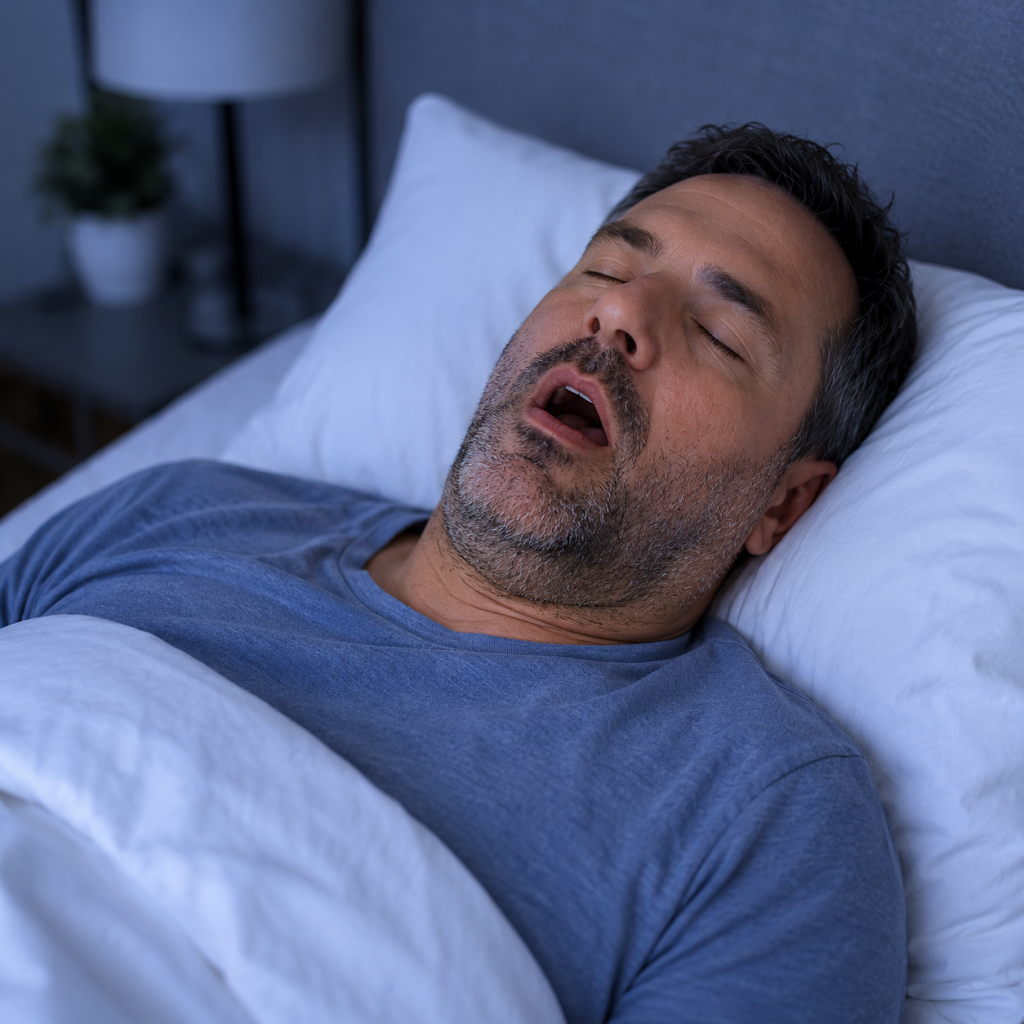
Side by side
Simple snoring vs. obstructive sleep apnea
Simple snoring
- The sound. Steady, rhythmic snoring
- Breathing. Continuous through the night
- Morning after. Generally wake refreshed
- Daytime. Normal energy levels
- Health risk. Low (though it can strain relationships)
- What to do. Stop snoring treatment can restore quiet nights
Obstructive sleep apnea
- The sound. Loud snoring broken by silence, then gasping, snorting, or choking
- Breathing. Repeated pauses of 10+ seconds, often witnessed by a partner
- Morning after. Dry mouth, morning headaches, feeling unrefreshed
- Daytime. Persistent sleepiness, brain fog, irritability, dozing off unintentionally
- Health risk. Elevated risk of high blood pressure, heart disease, stroke, and diabetes
- What to do. Needs evaluation and treatment - snoring relief comes with it
Red flags
When snoring deserves a closer look
Talk to us – or your physician – if your snoring comes with any of the following:
- Someone has seen or heard you stop breathing during sleep
- You wake yourself up gasping or choking
- The snoring is loud enough to be heard through a closed door
- You fight sleepiness while driving, working, or watching TV
- You have high blood pressure that's hard to control
- Your partner has moved to another room to escape the noise
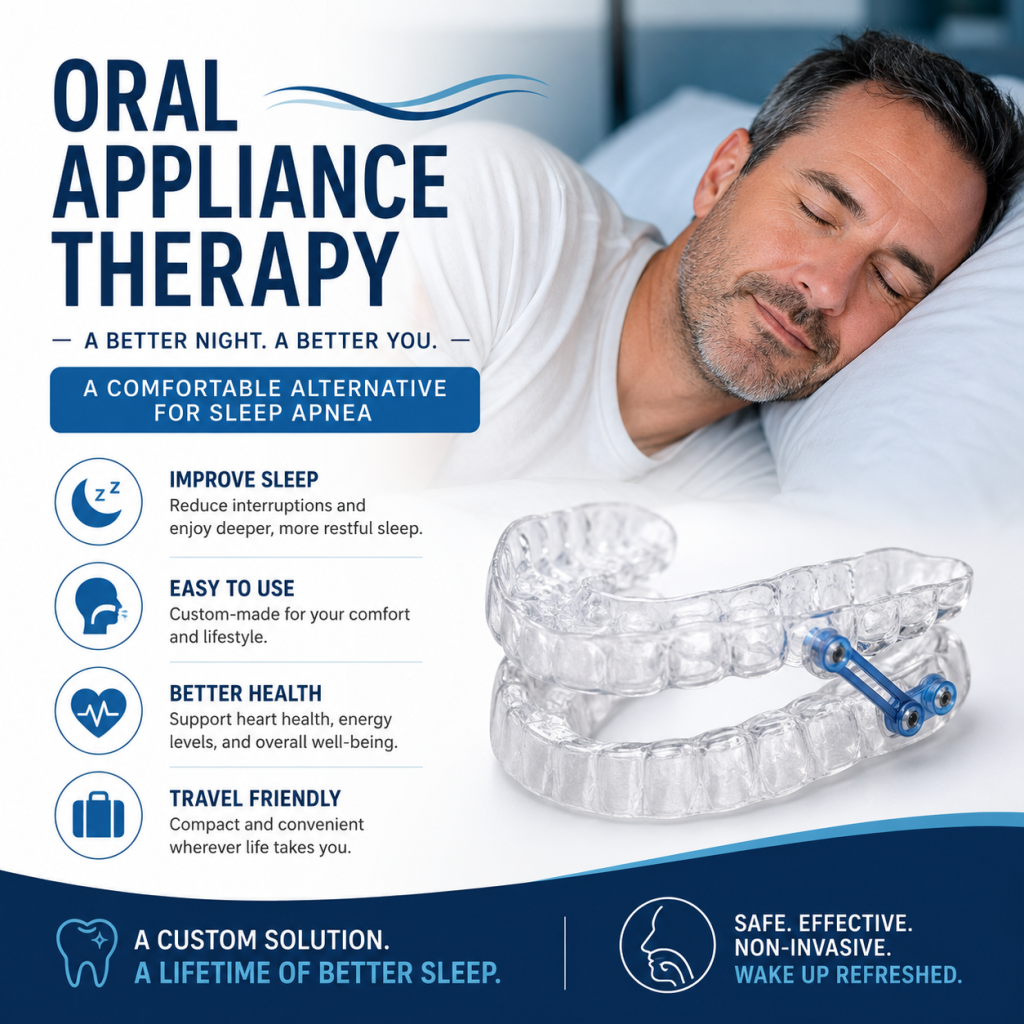
Stop snoring treatment
One appliance, two problems solved
Because snoring and obstructive sleep apnea share the same root cause – a collapsing airway – they often share the same solution. A custom oral appliance holds your lower jaw gently forward during sleep, which keeps the airway open, stops the tissue vibration behind snoring, and prevents the obstructions behind apnea.
For our Washington, PA patients, that usually means quieter nights for the whole household and genuinely restorative sleep for the person wearing it.
Give your household a quiet night's sleep
Whether it turns out to be simple snoring or obstructive sleep apnea, there’s a comfortable treatment path – and it starts with one conversation.